Skip to content
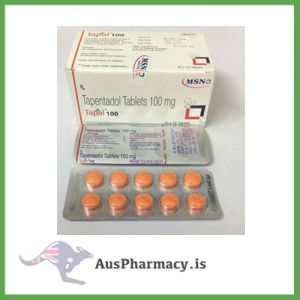
In an academic setting, Tapentadol 100mg Tablets (10 count) are valuable teaching tools for understanding how modern analgesics are designed to balance efficacy, safety, and tolerability. This article explores Tapentadol’s educational relevance, pharmacological properties, and research applications
1. Background and Educational Relevance
Tapentadol is an important subject in pharmacology and medical science courses because it exemplifies the next generation of synthetic pain modulators. It bridges the gap between traditional opioids and dual-action pain management agents.
Students studying pharmacodynamics, medicinal chemistry, and neuroscience examine Tapentadol to understand:
-
How drug design influences receptor affinity
-
The pharmacokinetics of centrally acting agents
-
The balance between efficacy and adverse effect potential
2. Chemical and Pharmacological Overview
-
Chemical Name: 3-[(1R,2R)-3-(dimethylamino)-1-ethyl-2-methylpropyl]phenol hydrochloride
-
Molecular Formula: C14H23NO·HCl
-
Molecular Weight: 257.8 g/mol
-
Pharmacological Class: Centrally acting analgesic
-
Mechanism of Action: µ-opioid receptor agonist and norepinephrine reuptake inhibitor
Tapentadol’s dual-action profile is a key educational feature, allowing students to explore how two mechanisms—opioid receptor binding and monoaminergic modulation—work synergistically to produce analgesia.
3. Mechanism of Action
a. µ-Opioid Receptor Agonism:
Tapentadol binds to the µ-opioid receptor in the central nervous system (CNS). This reduces pain signal transmission and alters pain perception.
b. Norepinephrine Reuptake Inhibition (NRI):
Tapentadol also prevents the reuptake of norepinephrine in synaptic clefts, enhancing descending inhibitory pain pathways in the spinal cord.
These two effects create balanced analgesia without the full potency or side effects typical of stronger opioids such as morphine, making Tapentadol a prime subject in pharmacological design and receptor theory.
4. Educational Applications
Tapentadol serves as a model compound for:
-
Demonstrating dual-mechanism drug design
-
Comparing opioid receptor affinities in drug classes
-
Studying pharmacokinetic and pharmacodynamic relationships
-
Understanding structure–activity relationships (SAR) in medicinal chemistry
-
Examining how synthetic molecules interact with neurotransmitter systems
In pharmacology labs, Tapentadol may be part of simulation studies or case-based learning modules.
5. Pharmacokinetics – A Teaching Perspective
Tapentadol’s pharmacokinetic profile provides an ideal example for modeling absorption, metabolism, and excretion.
| Parameter | Educational Focus |
|---|---|
| Absorption | Oral route; rapid systemic bioavailability |
| Distribution | Crosses blood-brain barrier efficiently |
| Metabolism | Mainly hepatic (glucuronidation and minimal CYP involvement) |
| Excretion | Primarily renal elimination |
This data allows students to create dose-response models and analyze drug clearance patterns.
6. Structure–Activity Relationship (SAR)
Tapentadol’s simplified molecular structure compared to older opioids highlights the evolution of rational drug design:
-
The phenol group contributes to µ-receptor binding.
-
The amine side chain supports norepinephrine modulation.
-
Structural balance reduces receptor overstimulation.
SAR exercises using Tapentadol help students visualize how molecular modifications affect receptor interaction and efficacy.
7. Comparison to Traditional Analgesics
Tapentadol is often compared with compounds like Tramadol and Oxycodone in research education.
| Compound | Mechanism | Educational Value |
|---|---|---|
| Tramadol | µ-agonist + SNRI | Illustrates early dual-action models |
| Tapentadol | µ-agonist + NRI | Shows selective neurotransmitter targeting |
| Morphine | Pure µ-agonist | Demonstrates traditional opioid pathways |
Through such comparisons, students understand the pharmacological continuum between opioid and non-opioid analgesics.
8. Laboratory and Research Use
For research purposes, Tapentadol tablets can be:
-
Used as chemical references in analytical methods (e.g., HPLC or LC-MS).
-
Included in pharmacology courses for receptor binding simulations.
-
Referenced in computational chemistry to study docking and molecular dynamics.
-
Examined in bioavailability and formulation research within academic institutions.
All handling must adhere to regulatory, ethical, and laboratory safety protocols.
9. Safety and Controlled Handling
Because Tapentadol is a controlled substance in many regions, it is strictly limited to educational and laboratory settings under authorized supervision.
-
Store securely at room temperature (15–25°C).
-
Handle only by qualified researchers or educators.
-
Maintain detailed documentation for traceability.
-
Dispose of expired material via approved channels.
Educators use Tapentadol to teach regulatory compliance and responsible pharmacological practice.
10. Neurochemical and Physiological Studies
Tapentadol’s activity provides an excellent model for exploring:
-
Pain transmission pathways in the spinal cord.
-
Neurotransmitter release modulation (norepinephrine signaling).
-
Receptor desensitization and adaptation mechanisms.
Such studies help students comprehend how analgesics alter neural activity at molecular and systemic levels.
11. Ethical and Regulatory Education
Tapentadol’s inclusion in controlled substance lists worldwide helps students grasp:
-
The ethical obligations of researchers handling regulated compounds.
-
Differences in scheduling between nations.
-
Legal implications of research misuse.
-
The importance of institutional review and compliance.
These lessons prepare students for real-world pharmacological and biomedical research environments.
12. Analytical Chemistry Perspective
In analytical chemistry courses, Tapentadol is often used to:
-
Validate chromatographic methods (HPLC, GC-MS).
-
Study purity profiles of active pharmaceutical ingredients (APIs).
-
Teach quantitative and qualitative testing methods.
Students learn how analytical methods confirm drug identity, concentration, and quality standards.
13. Educational Comparison of Side Effect Mechanisms
While Tapentadol has a milder side effect profile than many opioids, learning modules often discuss:
-
How µ-receptor agonism affects respiratory centers.
-
How norepinephrine reuptake influences heart rate and alertness.
-
How minimizing serotonin activity reduces risk of serotonin syndrome.
This comparative approach enhances understanding of pharmacovigilance and therapeutic window optimization.
14. Research Integrity and Laboratory Ethics
Educational handling of Tapentadol emphasizes:
-
Record keeping for every use instance.
-
Compliance with institutional ethics boards.
-
Proper labeling and segregation of research-only substances.
-
Transparent documentation to ensure scientific accountability.
Such principles help future scientists internalize professional research ethics.
15. Educational Conclusion
Tapentadol 100mg tablets serve as an invaluable educational model for modern analgesic design and neuropharmacology.
Their dual mechanism of action—combining µ-opioid receptor activation and norepinephrine modulation—illustrates how pharmacology is advancing toward multi-target, safer pain control strategies.
In classrooms and research settings, Tapentadol teaches:
-
The importance of mechanistic diversity in drug development
-
The value of safe, ethical handling of controlled compounds
-
The future potential of dual-action CNS therapeutics
By studying Tapentadol in this context, students gain a holistic understanding of drug discovery, regulation, and responsible pharmacological innovation.