Skip to content
Introduction
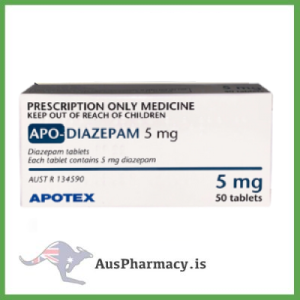
Valium, the brand name for Diazepam, is one of the most widely studied medications in the benzodiazepine class. Since its introduction in the early 1960s, it has served as a cornerstone for understanding central nervous system (CNS) depressants, GABAergic neurotransmission, and the psychopharmacology of anxiety and muscle relaxation.
From an educational standpoint, Valium is a valuable example in medical and pharmaceutical studies to illustrate drug-receptor interaction, pharmacodynamics, and the clinical principles of sedative-hypnotic agents.
1. Background and Educational Relevance
Valium (Diazepam) has long been recognized as a benchmark compound in pharmacology education. It provides an excellent model for teaching students about:
-
Anxiolytic drug mechanisms
-
Neurochemical modulation
-
Sedative pharmacology
-
Metabolic pathways of CNS depressants
Its widespread use and extensive research make Diazepam an ideal substance for academic instruction, particularly in pharmacy, medicine, and neuroscience programs.
2. Composition and Classification
Valium contains Diazepam as the active ingredient and belongs to the benzodiazepine family. It acts as a central nervous system depressant, enhancing the inhibitory effects of the neurotransmitter gamma-aminobutyric acid (GABA).
Each tablet commonly comes in 2mg, 5mg, or 10mg strengths and is formulated for oral administration.
This versatility allows researchers and students to study dose-response relationships and drug tolerance mechanisms across varying concentrations.
3. Mechanism of Action
The primary mechanism of Diazepam involves potentiation of GABAergic transmission.
It binds to benzodiazepine receptor sites on the GABA-A receptor complex, increasing the frequency of chloride ion channel opening, leading to:
-
Hyperpolarization of neurons
-
Reduced neuronal excitability
-
CNS depressant effects
Students studying Valium learn how ligand-receptor interactions affect neuronal firing rates and overall brain function, making it an ideal tool for teaching synaptic pharmacology.
4. Pharmacological Properties
Diazepam is known for:
-
Rapid absorption following oral administration
-
High lipid solubility, allowing quick CNS penetration
-
Long elimination half-life (20–50 hours)
-
Active metabolites (such as desmethyldiazepam) that prolong its effects
In pharmacokinetics education, Valium’s long duration and multi-phase metabolism make it an excellent case study for drug half-life, steady-state concentration, and enzyme-mediated metabolism.
5. Pharmacokinetics Overview
| Parameter | Description |
|---|---|
| Absorption | Rapid and complete from the GI tract |
| Distribution | Widely distributed; crosses the blood-brain barrier |
| Metabolism | Hepatic (CYP3A4 and CYP2C19 enzymes) |
| Excretion | Renal, mainly as glucuronide conjugates |
| Half-life | 20–50 hours (longer in elderly or liver impairment) |
Students learn to analyze such pharmacokinetic data to model how drug concentration changes over time in the human body.
6. Educational Applications
In academic settings, Valium is used to:
-
Demonstrate sedative-hypnotic drug mechanisms
-
Illustrate GABAergic neurotransmission in the CNS
-
Explore drug dependence and withdrawal concepts
-
Model enzyme polymorphism in hepatic metabolism studies
By studying Valium, students gain an understanding of how benzodiazepines interact with the brain’s inhibitory systems and influence behavior, cognition, and physiology.
7. Structure–Activity Relationship (SAR)
The benzodiazepine chemical structure of Diazepam features:
-
A benzene ring fused with a diazepine ring
-
A chlorine substituent at position 7 (enhancing potency)
-
A methyl group at position 1 (modifying metabolic stability)
This structure–activity correlation helps students understand how molecular modifications can affect potency, duration, and therapeutic activity.
8. Educational Use in Neuroscience
Valium’s effects on GABA-A receptors make it a key teaching model for:
-
Synaptic inhibition
-
Receptor binding kinetics
-
Ion channel physiology
It allows neuroscience students to visualize how modulatory compounds influence neurotransmission and neuronal circuitry.
9. Pharmacodynamics
Valium’s pharmacodynamic effects include:
-
Anxiolytic (anti-anxiety)
-
Sedative and hypnotic
-
Muscle relaxant
-
Anticonvulsant
-
Amnestic (memory impairment)
In pharmacology education, these effects demonstrate how a single drug can have multiple therapeutic outcomes depending on dosage and receptor selectivity.
10. Laboratory and Research Applications
In educational laboratories, Diazepam is studied for:
-
Receptor-binding assays
-
Electrophysiological experiments
-
Behavioral pharmacology simulations
-
CNS depressant modeling
Such research provides valuable data on dose-dependence, tolerance, and cross-reactivity with other GABAergic drugs.
11. Metabolism and Biotransformation
Diazepam undergoes hepatic metabolism primarily through CYP3A4 and CYP2C19 enzymes, producing active metabolites like:
-
Desmethyldiazepam
-
Temazepam
-
Oxazepam
These metabolites prolong the drug’s effect and are themselves pharmacologically active—an important concept when teaching prodrug metabolism and active metabolite pharmacology.
12. Ethical and Regulatory Education
Since Diazepam is a controlled substance, its academic discussion emphasizes:
-
Safe handling in educational contexts
-
Awareness of dependence potential
-
Regulatory restrictions under controlled drug legislation
Students also explore the ethical considerations of sedative prescription, emphasizing responsible pharmacological knowledge.
13. Side Effects and Safety Education
While not intended for medical advice, academic discussion includes understanding potential side effects to teach risk-benefit assessment:
-
Drowsiness
-
Reduced coordination
-
Cognitive impairment
-
Potential for tolerance and dependence
Students learn how such factors shape prescription guidelines and pharmacovigilance systems.
14. Toxicology Studies
In toxicology, Valium serves as a model compound to illustrate:
-
Overdose management principles
-
Flumazenil as a benzodiazepine antagonist
-
Drug–drug interactions with alcohol and opioids
This reinforces the importance of CNS depressant interactions in pharmacological education.
15. Educational Case Studies
Academic exercises may include:
-
Modeling Valium’s pharmacokinetic curve
-
Simulating receptor binding dynamics
-
Discussing genetic variations in CYP enzyme activity
-
Exploring case studies on dependence and withdrawal
These practical examples help students connect theoretical learning with real-world pharmacology.
16. Role in Pharmacological Research
Valium continues to play a significant role in:
-
Sleep and anxiety research
-
Neurotransmitter pathway studies
-
Receptor pharmacology
-
Drug tolerance and addiction studies
By examining Diazepam’s long-standing data, researchers and students alike gain insights into the evolution of modern psychopharmacology.
17. Neuropharmacology and Brain Function
Diazepam’s interaction with GABA-A receptors reduces excessive neuronal firing, making it an excellent model for:
-
Epilepsy studies
-
Anxiety modulation
-
Sleep physiology education
Through these insights, students learn how drug mechanisms contribute to understanding neurological disorders.
18. Conclusion
Valium (Diazepam) remains a cornerstone in pharmacological and neuroscience education.
It represents more than a sedative—it’s a window into the science of neurotransmission, receptor modulation, and psychopharmacology.
From biochemistry to behavioral studies, Diazepam continues to help students understand the intricate balance between drug action, safety, and clinical ethics.
By studying Valium, learners develop the analytical skills required to evaluate CNS-active compounds responsibly and with a focus on scientific integrity.